
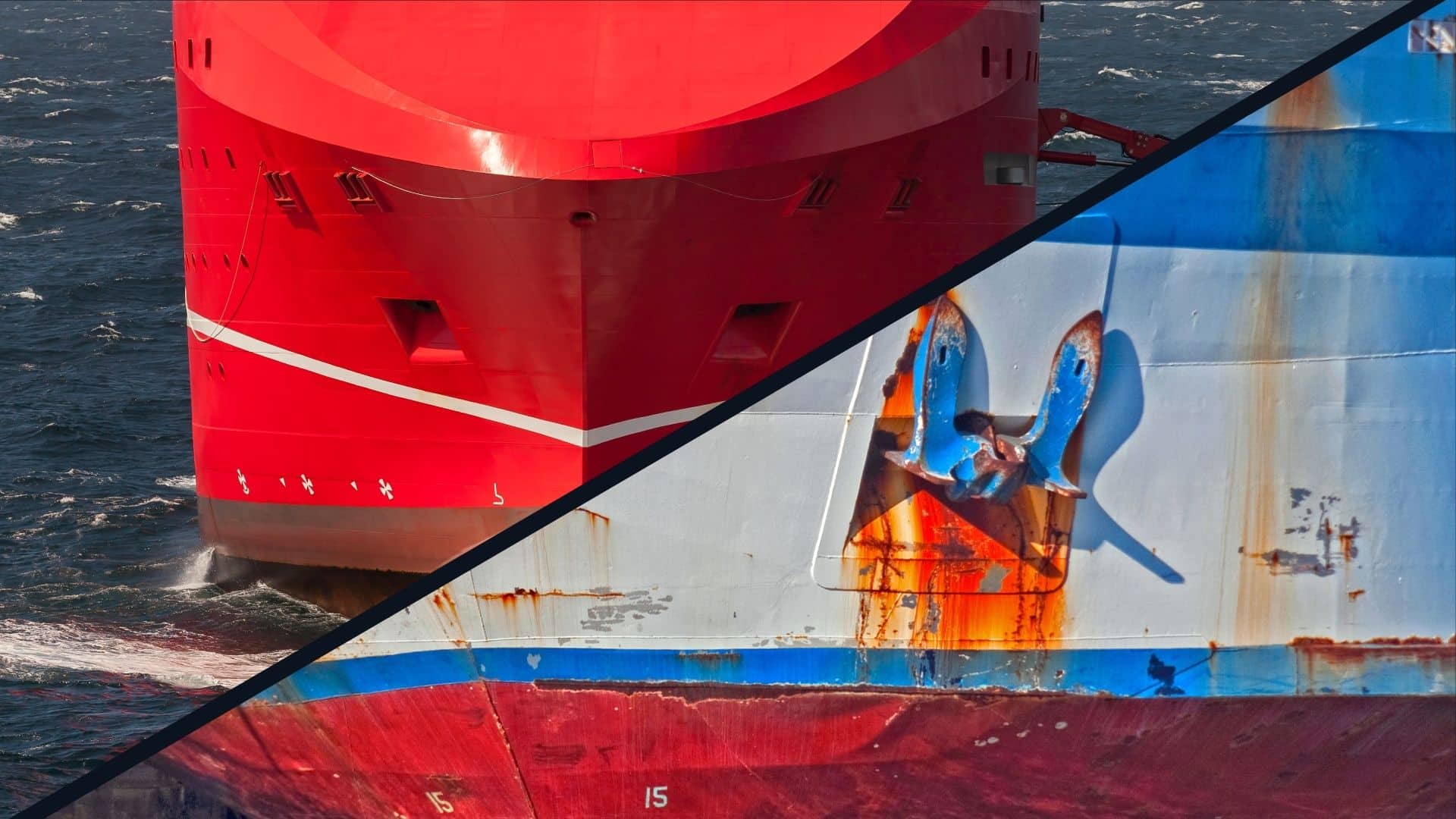
A PSV delivered in 2008 was a scrapping candidate in 2017. In 2026, the same vessel is on a term charter in West Africa, earning rates its owner had not seen in a decade, and being asked by that charterer to report fuel consumption per operational mode with the same accuracy as a hull delivered last year.
Older tonnage combined with rising expectations is now the defining condition of the offshore support vessel market. It changes how owners spend, how charterers select, and what both sides need to know about a vessel before they commit.
1. How old is the global offshore support vessel fleet in 2026?
More than half of the operational OSV fleet has passed 15 years of service, and average ages for PSVs and anchor handlers sit at or above 20 years, depending on segment and region. The operational fleet counted around 3,200 units at the end of 2025, while the laid-up fleet fell from over 1,500 vessels during the pandemic downturn to fewer than 400.
Learn more: Offshore vessel fleets tighten amid sustained supply discipline, Offshore Magazine
The unusual part is how little supply moved to produce that result. Net reactivations across 2025 amounted to two vessels. Scrapping stayed close to flat, with three vessels removed through 2026 against a peak of roughly 130 in 2018.
Read more: Why are OSV orders so low?, Hellenic Shipping News
2. Why the fleet is ageing faster than it renews
Three forces stacked up. The ordering booms that followed high oil prices between 2005 and 2012 put a large cohort of vessels into the water at the same time, so the whole fleet now moves through the same age bands together. The 2015 to 2020 downturn then removed hundreds of vessels permanently through scrapping, redeployment and conversion, and left surviving owners repairing balance sheets instead of ordering.
Scrap economics finished the job. With steel prices low and replacement cost high, a 20-year-old vessel with work in front of it is worth far more in a dry dock than sold for scrap. Life extension has become a rational choice, and the market has rewarded it.
3. What an ageing OSV fleet does to utilization
Market utilization averaged 76% across the global fleet in 2025, with on-demand days up 2% year-on-year. Westwood expects 77% in 2026 and above 79% in 2027. Those gains come from the supply side, since commercially available tonnage is limited rather than abundant.
Macro pressures ease as OSV utilisation strengthens in 2026, Westwood Global Energy Group
For owners, that means vessels which would have sat idle in 2017 are now earning. For charterers, it means the vessel offered for a campaign is often older than the tender’s specification, with fewer fallback options than three years ago. Both parties end up needing the same evidence: what this specific hull consumes and delivers on this specific scope of work.
For charterers, availability is only the first filter. Two vessels can satisfy the same technical specification while delivering very different fuel performance, emissions profiles, maintenance reliability, and operational efficiency. As fleets age, historical operational data becomes the best way to evaluate a vessel on what it has actually done, rather than on age or design specifications alone.
4. The industry is entering a life extension decade
The offshore support vessel industry has stopped waiting for a rapid fleet renewal cycle. Across most regions, operators are extending the life of existing assets while investing selectively in efficiency, compliance, and reliability upgrades. Vessels can and do operate well beyond 20 years, so the live questions are how efficiently they do so, and where owners should prioritize limited retrofit budgets.
5. Why shipowners stay cautious about OSV newbuilds
The global orderbook stood at 216 vessels at the end of 2025, split roughly 57% anchor handlers and 43% PSVs, and weighted towards midsize and smaller designs. Scarcity at the top end of the fleet remains untouched by what is currently on order.
Four reasons explain the restraint:
- Capital cost. A large PSV runs $35 to $50 million and an AHTS $50 to $80 million, figures that most post-downturn balance sheets cannot absorb without external financing.
- Contract duration. Charter terms rarely extend far enough to underwrite an asset expected to trade for 25 years or more.
- Technical uncertainty. An order placed today fixes a fuel and propulsion choice for decades, while methanol, battery hybrid, and dual-fuel configurations are all still moving.
- Cycle timing. A newbuild ordered today may only be delivered several years from now, potentially into a market that has already changed.
AHTS and PSV Market 2026: North Sea OSV rates, ageing fleet and supply vessel analysis, Offshore Industry
6. Why is retrofit the preferred route for older offshore support vessels
Retrofit keeps the asset in a market that is paying. Capital outlay sits at a fraction of a newbuild; the work fits a planned docking window instead of a two-to-three-year build, and the scope can be sized to the contracts the vessel realistically wins.
Common scopes on OSVs over the past 15 years include battery hybrid packs and energy storage, shore connection, power and energy management systems, thruster and propulsion upgrades, hull coatings and propeller work, HVAC and lighting, DP and automation refresh, and digitalized reporting.
The hard part is allocation. A hybrid package pays back quickly on a vessel with frequent load swings and long DP hours, and slowly on one that spends its life in steady transit. Two sisterships with identical specifications can differ by double-digit percentages in daily consumption because of where and how they work. Fleet averages hide precisely the information needed to choose.
One PSV monitored by Opsealog for a Middle East operator averaged 0.9 main engines running during in-port idle time, while its sistership on comparable activity averaged 0.3. No specification sheet would have shown that gap. Once the practice was corrected, average fuel consumption fell by 53% over the following four months, and the vessel ran its main engines 356 hours less, the equivalent of 14.8 days on a single engine.
Read more: Engine Utilization Optimization: A Path to Cost and Emission Reduction in Vessel Operations, Opsealog case study
7. Where data decides which retrofit is worth funding
Four questions decide whether a retrofit budget goes to the right vessel, and all four are answered with operational data rather than assumptions.
- The operating profile of each vessel. Hours split across DP, standby, transit, and port, with engine load in each mode. This is what sizes a battery installation or rules it out.
- Engine running hours, per vessel and per engine. On an ageing fleet, this is often where the shortest payback sits, because engine hours set overhaul intervals, lubricating oil consumption, and breakdown risk as much as they set fuel spend.
- Vessel-to-vessel comparison. Sistership benchmarking separates machinery condition from crew practice and from operating pattern, which tells you whether you are looking at a technical issue or a behavioral one. A vessel that consumes 30% more than its sistership may need an operational change rather than a technical investment.
- A defensible baseline and continuous reporting. A saving claimed without a measured starting point will struggle in a finance review and in a charterer audit. The same dataset feeds EU MRV, EU ETS exposure, charter party KPIs, and tender questionnaires, which increasingly ask for verified consumption per activity, per vessel.
There is a practical constraint worth naming. Older vessels are the least instrumented, so a monitoring plan that depends on installing sensors across the fleet becomes a capital project competing with the retrofit it was meant to justify. Opsealog’s approach is designed for ageing fleets, where fitting new sensors across dozens of vessels is hard to justify. By digitalizing existing operational reports and combining them with available onboard data streams, owners and charterers can benchmark vessels consistently without significant hardware investment, so a 2007-built PSV and a 2023-built one sit on the same basis.
8. What to look for in your own fleet
The practical starting point is the same on both sides of the charter: comparable performance metrics, by vessel type and operational mode, over the same period. Most fleets cannot produce that view today, and the gap matters more than any single retrofit decision, because it is what tells you whether the spread between your best and worst sistership is a machinery problem or a practice one, and where life extension still pays across your age bands.
That knowledge is becoming a commercial asset. An owner who can show what a 2008 hull delivers on a given scope competes with a newer vessel on evidence. A charterer who can read the same data stops paying newbuild expectations for tonnage that will not meet them and can write charter terms around what the vessel does.
The ageing OSV fleet has become the industry’s operating reality rather than a passing consequence of market cycles. Significant fleet renewal will arrive eventually. Until it does, the advantage belongs to owners and charterers who understand the true performance of their vessels and can prioritize investment decisions using evidence rather than assumptions.
Opsealog helps offshore fleet operators turn existing vessel data into performance decisions, with no hardware onboard.